
OPEN-PROM: bringing energy-system dynamics into the AgEnRes modelling toolbox
Energy prices do not stop at the farm gate. For agriculture, changes in
crude oil prices, fuel markets, energy policy and decarbonisation pathways can quickly affect production costs, input
choices and resilience. This is why, for the AgEnRes modelling toolbox, one of the project’s key results, the focus is
not on modelling agriculture in isolation, but on connecting farm-level and land-use analysis with the wider energy
system.
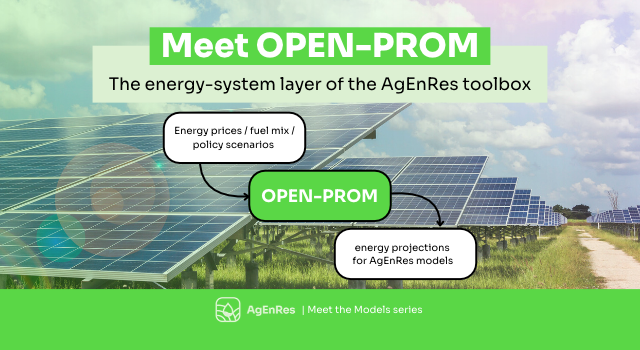
And OPEN-PROM is precisely the model which helps us bridge this gap between farm and the energy system. OPEN-PROM, short for Open Prometheus, is a modular, open-source Integrated Assessment Model (IAM) used to project energy and land-use developments under alternative macroeconomic, technological and policy scenarios when coupled with a land-use model. It covers 39 world regions, energy demand sectors such as industry, transport, residential and commercial demand, agriculture and carbon dioxide removal, as well as energy supply sectors including electricity, hydrogen, heat, liquids, solids and gases.
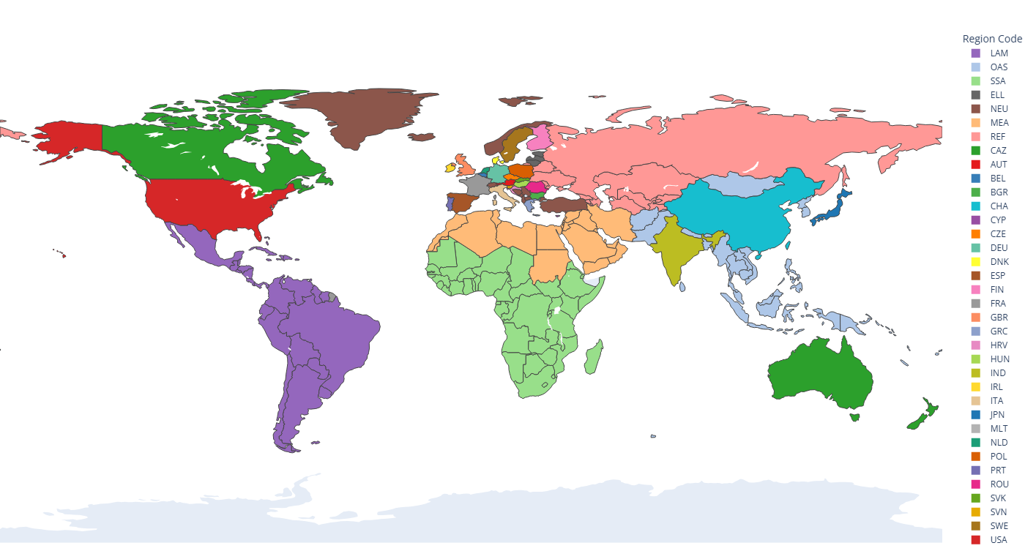
Figure 1: OPEN-PROM regions
What does OPEN-PROM do?
OPEN-PROM is designed to analyse the interactions between energy demand, supply and energy prices at regional and global level. It supports the assessment of climate mitigation pathways, low-emission development strategies, energy and climate policy measures, and the evolution of global energy prices under different policy assumptions, producing projections on:
- primary, secondary and final energy use
- energy-related emissions
- energy prices
- power generation mix
- investments and equipment capacities
- carbon capture and carbon removals
- energy and carbon intensity
- trade and sectoral activity
Even more so, all outputs are reported by region, sector and year up to 2100. For modellers, this makes OPEN-PROM particularly useful because it gives a structured way to translate energy-market assumptions and policy scenarios into variables that can be passed downstream to other models.
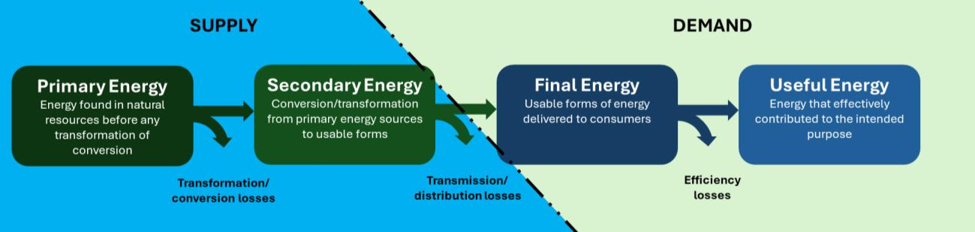
Figure 2: OPEN-PROM Supply-Demand
What goes into the model?
Energy-system shocks and policy scenarios must be grounded in credible data before they can be translated into agricultural impacts. OPEN-PROM relies on a broad set of inputs, including energy balances and fuel prices for the base year, technology techno-economic data, power generation capacities, macroeconomic indicators, policy assumptions and other sector-specific information. Its input sources include the International Energy Agency, IRENA, EDGAR, the International Road Federation, World Bank, IIASA, Eurostat and other databases.
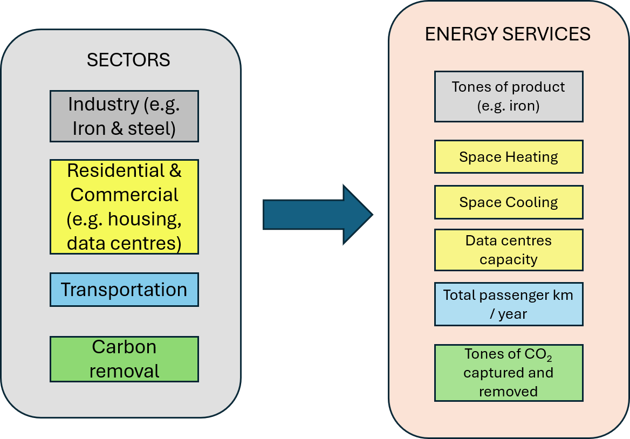
Figure 3: OPEN-PROM sectors / energy services
OPEN-PROM’s role in the AgEnRes Toolbox
OPEN-PROM does not model farm decision-making directly, but it helps define the energy-system conditions under which those decisions take place. Within AgEnRes, it is used to assess how crude oil price shocks may affect agricultural energy prices and fuel consumption. The resulting energy price projections are then provided as inputs to land-based and farm-level models, helping the project assess how resilient the EU agricultural sector may be under external energy shocks.
Beyond this, OPEN-PROM will also quantify energy-system impacts, including changes in agricultural fuel consumption, shifts in the fuel mix and associated CO₂ emissions under climate policy scenarios. These outputs support the evaluation of direct and indirect effects of climate policy on agricultural production, resource use and sectoral transformation pathways.
Altogether, within AgEnRes, OPEN-PROM helps address questions that shape the assumptions that flow into land-use and farm-level models, including:
- How could energy demand, supply and technology deployment evolve in the EU under different economic, technological and policy scenarios?
- Which climate mitigation pathways and low-emission strategies are most effective in achieving climate targets in the agriculture sector?
- What are the main decarbonisation options and strategies in large emitting sectors such as industry, energy supply, transport and agriculture?
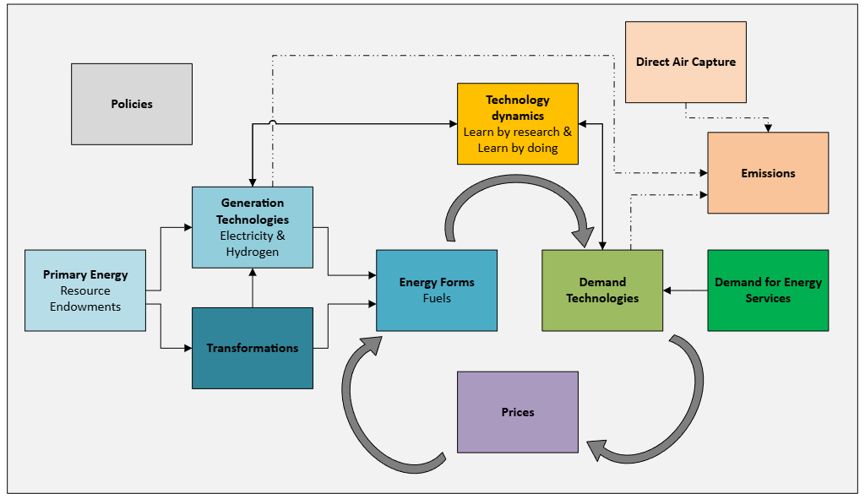
Figure 4: A diagram of the model's core mechanisms
If you read our previous entry introducing the toolbox, you should remember that a key challenge in energy-resilience modelling is avoiding a disconnect between the macro-level energy context and the micro-level agricultural response: If farm models receive static or simplified assumptions about energy prices, fuel availability or fuel mix, they may miss important future dynamics. By feeding energy price projections and fuel-system scenarios into the rest of the toolbox, OPEN-PROM helps make the AgEnRes model chain more coherent across scales.
As one of the lead researchers puts it:
“OPEN-PROM enables us to translate complex energy-system dynamics into actionable insights for policy, resilience, and sustainable transitions for the agriculture sector.”
Put simply, OPEN-PROM sets the energy context, allowing for other models explore how agriculture reacts. That interaction is key to the toolbox and to the wider goal of understanding how European agriculture can become more resilient to fossil-energy dependence and input price fluctuations.
You can learn more anout OPEN-PROM here: https://e3modelling.github.io/OPEN-PROM/